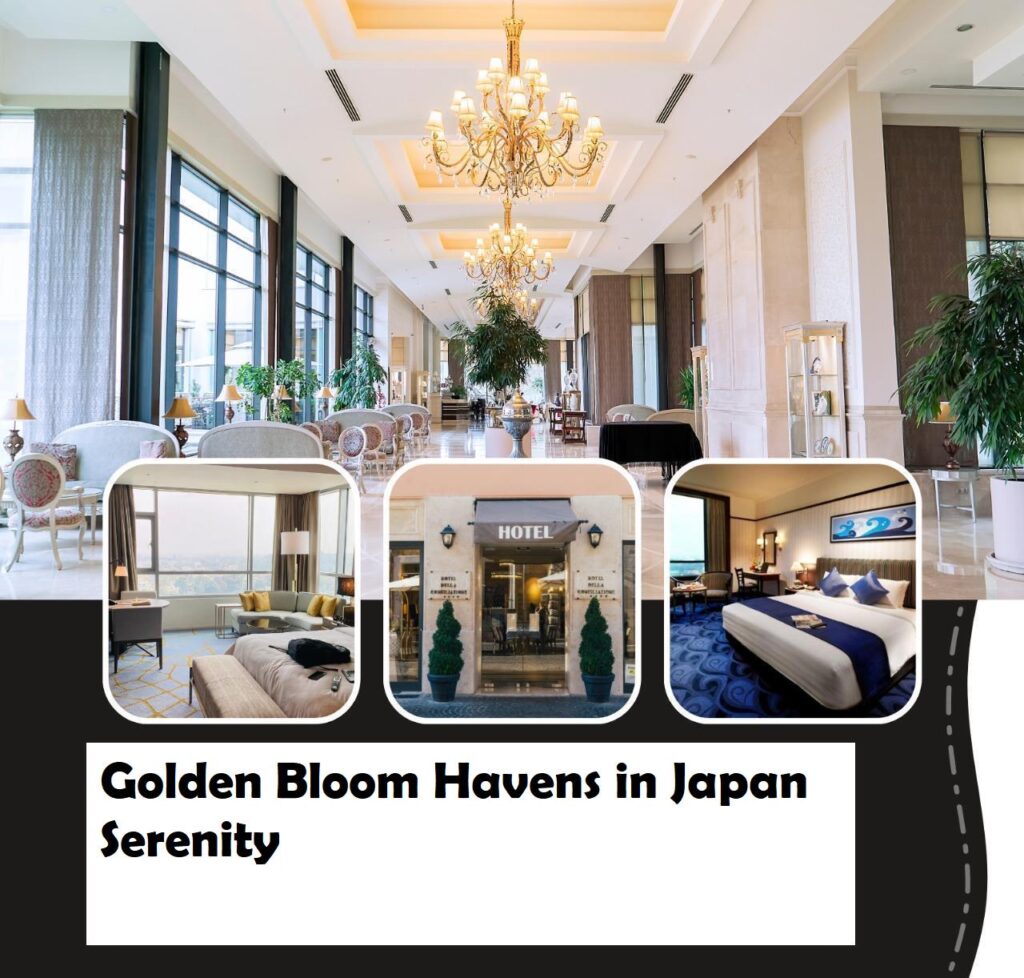
There is a certain hour in Japan when everything turns to honeyed quiet—the tea steam curls, the lanterns blink awake, and even the wind decides to speak in whispers. Golden Bloom Havens in Japan Serenity is an invitation into that hour. It’s where craft and calm are braided together: rooms lined in cedar and shoji, private baths fragrance-warm with hinoki, bowls of seasonal fruit glistening like tiny suns. Each haven celebrates a different facet of the archipelago—river, garden, mountain, and forest—yet all share one promise: a luminous stillness that lets you feel time stretching, soft and generous.
Sakura Lantern Villa — Kyoto’s River Whisper
Along a willow-lined canal, this machiya-style hideout balances heritage grace with modern ease. Step through the noren curtain into a courtyard of stone and moss; slip off your shoes and feel the rush of tatami underfoot. Suites feature a tokonoma alcove dressed with a seasonal ikebana stem, a low platform bed, and a private hinoki bath that scents the air like sunshine on wood. Evenings bring lantern glow on the engawa as a kaiseki supper arrives—river fish, mountain vegetables, a gleam of yuzu. In the morning, a tea host guides a quiet, mindful ceremony; the city’s bustle remains a rumor beyond the screen doors.
Amber Tea Pavilion — Kanazawa’s Garden Lines
In the city where gold leaf is an art form, this pavilion channels Kanazawa’s refined poise. Picture minimalist suites oriented toward a pocket garden—gravel raked in brushstroke arcs, a single maple blazing at the edges. The tearoom anchors the experience: whisked matcha, hand-shaped wagashi, and the soft percussion of bamboo on stone. A craft concierge can arrange an atelier visit to see gold leaf pressed to paper like captured sunlight. Dinner follows the season’s kaiseki logic—snow crab in winter, sweet shrimp in spring—finished with a glimmer of gold leaf atop a delicate pudding, subtle rather than showy, perfectly Kanazawa.
Golden Onsen Sanctuary — Hakone’s Mist & Pines
High in the hills, this onsen retreat frames Hakone’s shifting weather like a living scroll. Slide open the window and hear pine needles exhale; in your rotenburo (open-air hot spring), mineral water wraps you in heat as mist drifts across the valley. Interiors strike a crisp dialogue between washi textures and floor-to-ceiling glass. After a soak, a cedar-scented sauna and a tray of citrus-salt await. Supper is mountain-bright—charred bamboo shoots, wagyu kissed by binchotan embers. At 10 p.m., the property observes a “yūgen hush”—lights dim, phones disappear, stars take over. You sleep like a stone in a riverbed.
Sunlit Cedar Retreat — Nara’s Deer & Temple Forests
On the forest fringe, this refuge listens to Nara’s ancient heartbeat. Deer sometimes ghost past the outer fence at dawn, delicate as calligraphy strokes. Rooms are spare and generous: beams of warm cedar, paper lamps that hold pockets of light, futons folded with ritual care. Begin the day with a temple-led meditation; end it on the engawa with plum wine and a bowl of simmered mountain greens. The chef favors earthy flavors—sesame, burdock, fragrant mushrooms—and a clear broth that tastes like the forest after rain. It’s the kind of place where conversation softens, and every footstep feels intentional.
Q&A and Further Recommendations
When is the best time to visit?
Spring (late March–April) for sakura and soft temperatures; autumn (late October–November) for gilded ginkgo and maple fire. Winter intensifies the onsen magic in Hakone, while Kanazawa’s gardens glow under snow.
What makes these havens “golden”?
Not opulence for its own sake, but the golden thread of craft—tea performed with care, wood joined without nails, flavors that honor the season. The glow comes from attention.
Are these stays suitable for couples or families?
Both. Couples will love the privacy of in-room baths; families can book multi-room suites and request early suppers. Staff can tailor experiences (short tea lessons, gentle garden walks) across ages.
How long should I stay?
Two to three nights per haven is ideal. Pair Kyoto + Nara for heritage flow, or Kanazawa + Hakone for craft and hot springs. A four-stop arc becomes a serene week.
What should I book around the stay?
A guided garden stroll in Kanazawa, a private tea session in Kyoto, a forest bathing walk in Nara, and a sunrise soak in Hakone. Keep one afternoon unplanned—the finest luxury is unhurried time.
Other hotels to consider (similar spirit):
- Hoshinoya Kyoto (riverfront elegance)
- Gora Kadan, Hakone (ryokan classicism with onsen)
- Zaborin, Niseko (villa-style ryokan with private baths)
- Amanemu, Shima Peninsula (modern serenity + mineral springs)
- Benesse House, Naoshima (art-immersive coastal calm)
Conclusion: The Quiet Shine
Golden Bloom Havens in Japan Serenity isn’t about ticking sights; it’s about collecting textures of calm—the grain of cedar under your palm, a lantern’s tremble in night air, the warmth of mineral water on winter skin. Here, luxury is the privilege of presence: breakfasts that stretch into conversations, doorways that open to moss and light, keys that unlock not just rooms but silence. You leave with a quieter pulse and a subtle radiance, as if some secret seam of gold has been stitched, gently and forever, into your day.