There is a certain glow the mountains of Japan reserve for travelers who arrive with unhurried hearts. At sunrise, ridgelines shimmer like lacquered gold; at dusk, lanterns bead along cedar paths with a warm, pearly hush. “Golden Pearl Havens in Japan Mountains” gathers that radiance into a series of intimate stays—places where hinoki steam curls from private baths, where tatami rooms open to whispering pines, and where hospitality is practiced as a serene art. These sanctuaries are for seekers of quiet spectacle: the slow pour of matcha beside a frost-bright window, the pop and crackle of an irori hearth, and the kind of sleep only mountain air can offer. Each haven below is a distinct mood, a curated invitation to savor Japan’s highland allure.
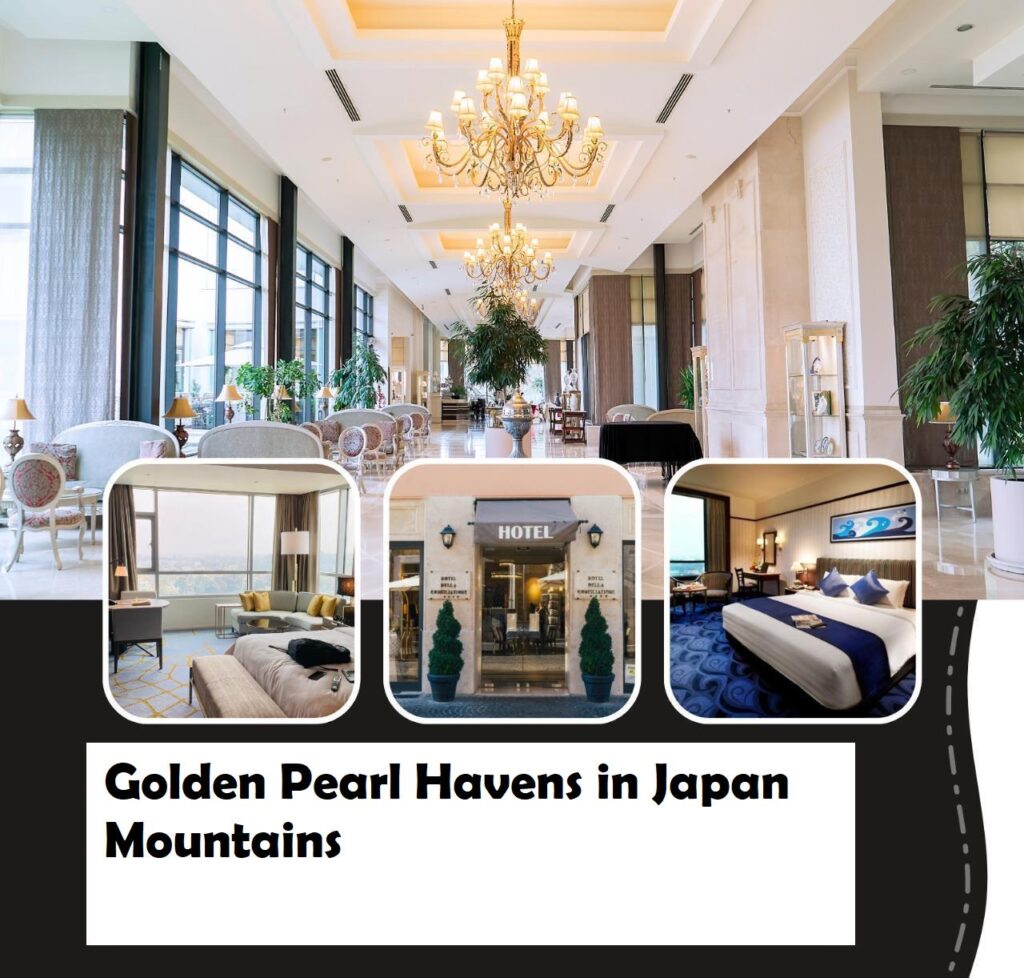
Kintsugi Lantern Villa — Nagano Alps Glow
A modern ryokan inspired by kintsugi craftsmanship, this villa celebrates imperfect beauty with gold-traced ceramics, shoji-filtered light, and subtle cedar aromas. Mornings begin with a private hinoki-wood onsen facing ridgelines blushed rose by first light. Afternoons drift into slow tea rituals; evenings settle around low tables for kaiseki that translates terroir—buckwheat, mountain vegetables, river fish—into delicate courses. Floor-to-ceiling windows frame snow lanterns in winter and wildflowers in summer, creating a soft, pearlescent sheen that makes even silence feel luminous.
Mist & Maple Pavilion — Nikko Highlands Reverie
Set among cryptomeria and maple, this pavilion leans into the hush of Nikko’s sacred groves. Suites layer washi textures and charcoal accents, while balconies overlook waterfalls that thread silver through mossy stone. A chashitsu (tea room) hosts short, contemplative ceremonies with seasonal wagashi; a tiny library holds travelogues and poetry for rainy afternoons. At night, lanterns line a wooden promenade to open-air baths, where mist rises like silk and the sky reflects in a still bowl of onsen water.
Snow Lantern Outlook — Hokkaido Powder & Stars
Above a valley of powder snow, this glass-lined refuge plays with light: sunbeams scatter on frosted birch, while night skies spill constellations across the eaves. After snowshoeing or gentle ski runs, slip into an ofuro scented with yuzu and cypress. Dinner highlights Hokkaido’s briny sweetness—uni, scallops, and winter greens—balanced by warm rice cooked in earthen pots. Textiles nod to Ainu motifs, lending the interiors a tactile, heritage richness. On clear nights, staff dim every bulb so the Milky Way becomes your chandelier.
Fuji Ember Chalet — Yamanashi’s Golden Hour
At the foothills of Fuji, this chalet is composed like a viewfinder. Picture windows frame the mountain’s changing moods—amber at sunrise, blush at dusk. Interiors favor linen, clay, and soot-touched timber around an irori hearth for charcoal-grilled delicacies. A barrel-style rotenburo (open-air bath) sits on a deck edged by bamboo; drop in a handful of seasonal herbs and watch fireflies spark to life. It’s peaceful, cinematic, and impossibly intimate—an alpine retreat with the quiet theater of Fuji as its lead.
Q&A — Planning Your Mountain Escape
Q: What makes these “Golden Pearl Havens” feel truly exclusive?
A: Privacy and intention. Each stay prioritizes low-key luxury—private baths with mountain views, thoughtful kaiseki rooted in local harvests, and design that frames nature like art. Instead of spectacle, you get texture: steam, wood grain, wind in the pines, and time that stretches.
Q: When is the best time to visit?
A: For color and crisp air, late October–November in Nikko and the Japanese Alps is sublime; for stargazing and snow rituals, January–February in Hokkaido is magic; for clear Fuji vistas, December–March often brings the sharpest skies. Spring (April–May) offers fresh greens and quieter trails.
Q: Are these retreats suitable for families?
A: Many welcome families, especially with multi-room suites and gentler outdoor activities (easy hikes, craft workshops, tea tastings). Do note that some ryokan dining rooms and onsen etiquette encourage quieter evenings—perfect for families who enjoy a calm pace.
Q: What should I pack for mountain ryokan stays?
A: Layers and slip-on shoes for tatami areas; a light down jacket in shoulder seasons; compact rainwear; and swimwear only if your haven offers private tubs where it’s permitted (public onsen typically do not). Most provide yukata, socks, and amenity kits.
Q: Other mountain retreats to consider if itineraries are tight?
A: Explore tranquil ryokan around Hakone’s lake district for easy Tokyo access; look to Karuizawa for forest-lined cycling paths; and scan Takayama’s outskirts for timbered lodges near old-town streets. In Hokkaido, alpine cabins near Daisetsuzan balance hot springs with gentle trailheads.
Conclusion — Where Quiet Radiance Lives
“Golden Pearl Havens in Japan Mountains” is not about collecting grand gestures; it’s about collecting moments that glow. A jaw uncurls in the hinoki steam. Matcha blooms in a hand-mended bowl. A window turns to gold as the sun slips behind a ridge. These retreats deliver exclusivity through presence—private rituals, elemental design, and food that tastes of the slope just beyond your veranda. Come for the mountains; stay for the radiance that lingers long after the last lantern dims.