The phrase “Silver Drift Havens” conjures slow-travel romance: dew-bright mornings, cream-stone farmhouses that glow like silver at dusk, and roads that meander through vineyards, orchards, and villages where time seems politely unhurried. Across the French countryside—from the lavender seas of Provence to the vine-laced slopes of Burgundy—these havens are less about spectacle and more about sensation: the hush of cicadas, crisp linens cooled by stone walls, and suppers that begin with a garden tomato and somehow end beneath a chandelier of stars. Below, imagine a collection of themed retreats—each one a different key on the piano of rural France—crafted for guests who prefer the art of lingering.
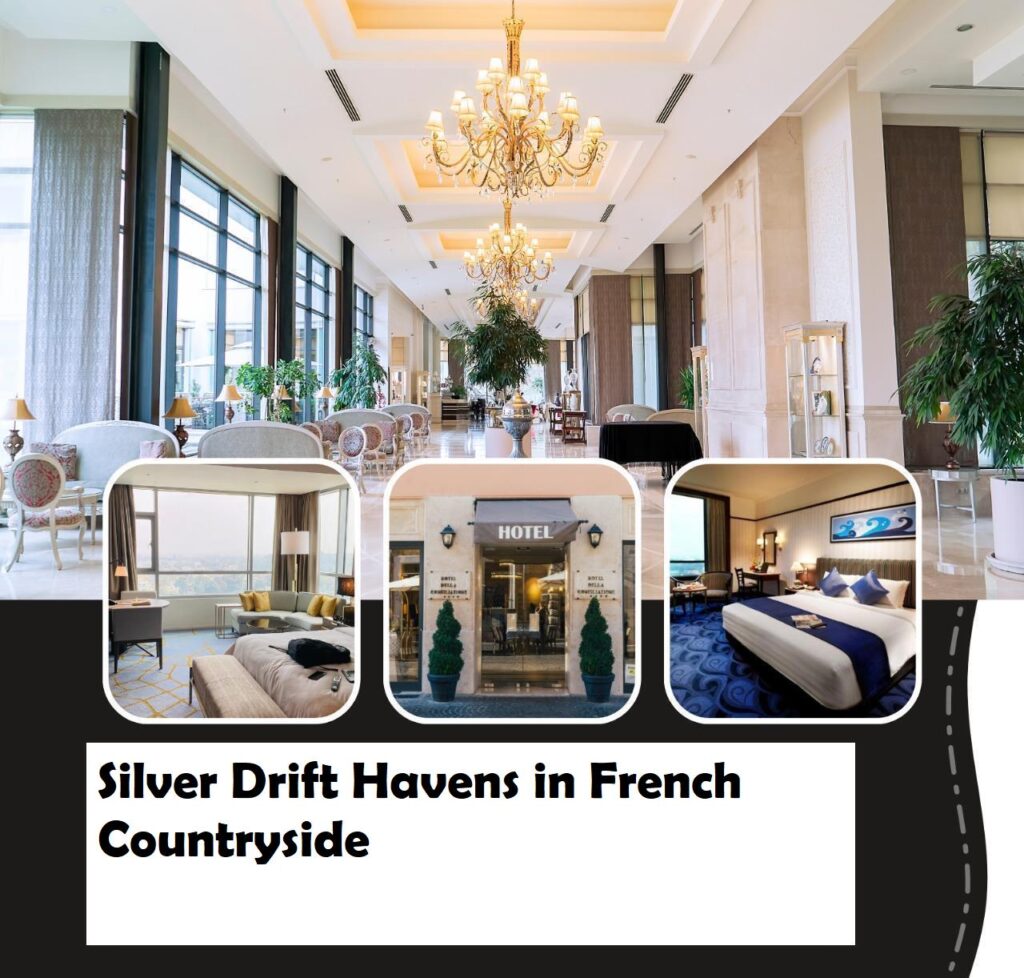
1) Lavender-Mist Pavilions — Provence
In Provence, the air itself feels perfumed. Lavender-Mist Pavilions tuck into olive groves and cypress alleys, pairing pale-stone suites with shady loggias where breakfast arrives on a tray of ceramics. Expect a small plunge pool edged with rosemary, a reading hammock slung between two gnarled trees, and a terrace for sunset rosé. Inside, plaster walls keep rooms cool; outside, e-bikes wait for golden-hour rides past mills and hilltop villages. Nights end with a bath steeped in the property’s own lavender salts—sleep comes fast.
2) Riverstone Atelier — Dordogne
The Dordogne bends like a ribbon, and Riverstone Atelier sits on one of its quietest curves. Canoes slide beneath limestone cliffs by day; by night, a candlelit grotto becomes a private dining room carved straight from the rock. Suites are an artist’s dream: limewashed walls, antique easels, baskets of charcoal for sketching river scenes. In late summer, a truffle hunter leads you into oak stands at dawn; by lunch, shaved treasures lace an omelet folded like silk. Service is unhurried, the kind that senses your mood and meets it.
3) Loire Lantern Manors — Loire Valley
Imagine a petite manor with gardens the color of a watercolor evening. Loire Lantern Manors glow from within—paper lanterns drifting above gravel paths, the clink of glasses in a vaulted tasting room. Each suite pairs a canopy bed with a writing desk facing orchards and the lazy sweep of the Loire. Borrow a vintage bicycle and follow the towpath to a château; return to a sommelier-led flight of local Sauvignon and Chenin Blanc. When morning fog lifts, the valley reveals itself like a stage set.
4) Burgundy Starlight Lofts — Côte d’Or
At Starlight Lofts, vines run in precise rows to the horizon. Interiors mix oak beams with slate floors and a cooper’s tub hewn from a retired wine barrel. Afternoons bring private cellar tours and a hands-on blending session with a local winemaker; evenings, a country-table dinner where Comté and mustard dress a salad that needs nothing else. A telescope on the deck makes a ritual of the night sky—Burgundy tastes even better when Orion keeps watch.
5) Alsace Timber & Quartz Chalets — Vosges Foothills
Half-timbered charm meets mountain hush at Timber & Quartz Chalets. Think linen-draped beds, cast-iron stoves, and stone terraces that catch the first light over patchwork vineyards. A Riesling is always cooling; a picnic rucksack waits with smoked trout, Munster, and cherry jam. Wander pastel villages with flower-stuffed balconies, then climb into the conifers where quiet is thick and cleansing. Back at the chalet, a quartz-lined spa room channels forest calm into a single, steady breath.
Q&A + Extra Recommendations
Q1: What’s the best time to visit?
A: Late spring (April–June) and early autumn (September–October) bring soft light, mild temperatures, and markets brimming with seasonal produce. July–August is lively but warmer and busier; winter is serene for fireplace retreats and truffle menus.
Q2: Are these havens suitable for families?
A: Yes—many offer connecting suites, kitchenettes, and safe gardens. In rural areas, you’ll find pony rides, canoeing, easy cycling trails, and pastry workshops that turn kids into devoted croissant critics.
Q3: How do I get around without stress?
A: Arrive by TGV to a regional hub, then rent a compact car or use e-bikes for local rambles. Many properties arrange transfers, drivers for vineyard days, and luggage forwarding if you’re cycling between towns.
Q4: What kind of stays work best—short or long?
A: A two- or three-night stay per region lets you attune to the local rhythm: one day for markets and villages, one for vineyards or rivers, and a final day to do nothing beautifully.
Q5: Any other countryside hotels to consider?
A: Look into elegant château stays in the Loire (near Amboise or Cheverny), boutique farmhouses in the Luberon around Gordes and Bonnieux, riverside manors in the Dordogne near La Roque-Gageac, vineyard inns in Burgundy around Beaune, and timbered guesthouses in Alsace’s wine route near Riquewihr and Kaysersberg.
Conclusion: The Quiet Grammar of Luxury
Silver Drift Havens in French Countryside is a promise to savor the spaces between the highlights: the hush before the village wakes, the steady tick of a bicycle freewheel, the last silver of dusk on a stone sill. These retreats trade fanfare for finesse—private rituals, locally woven comforts, and service that travels at your tempo. Come for lavender fields and limestone banks; stay for the way time lengthens, senses sharpen, and ordinary moments—an apricot, a bell, a breeze—turn quietly, exquisitely, exclusive.