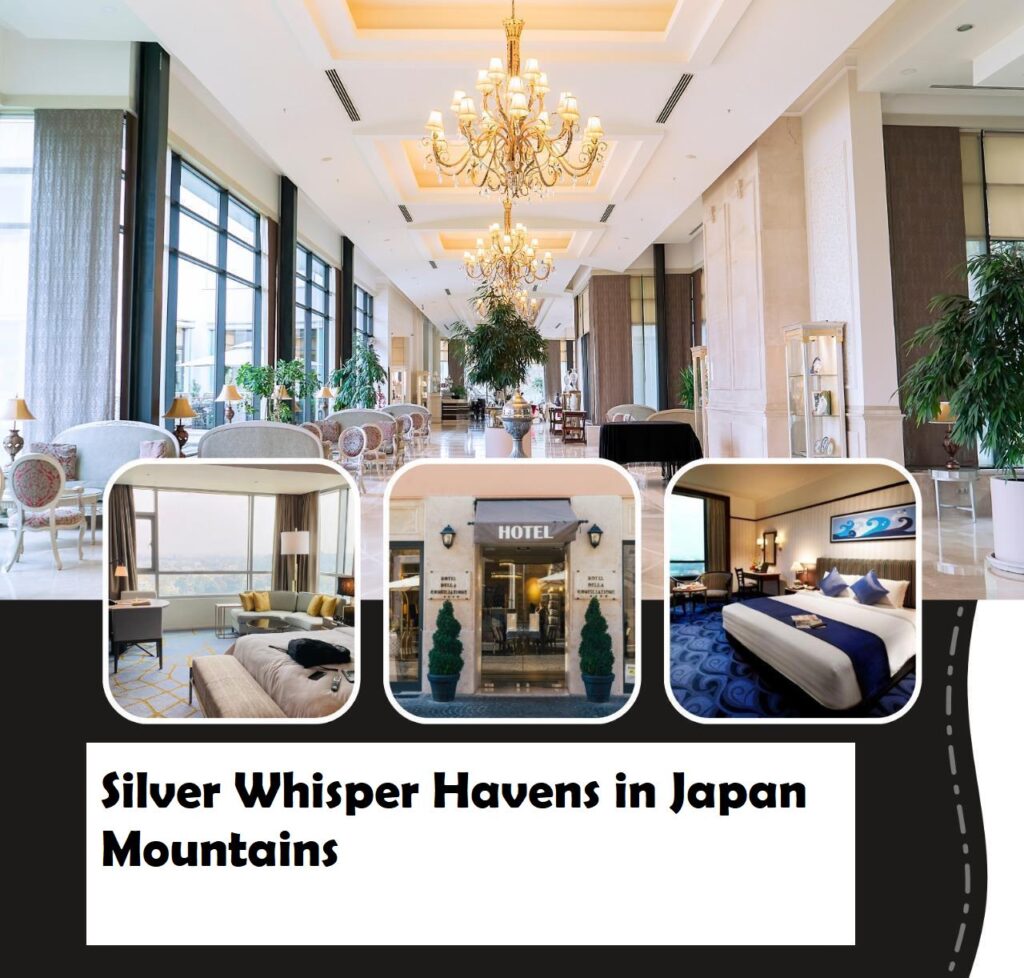
There’s a hush that falls over Japan’s high country at dawn—the kind of crystalline silence that lets you hear snow settling on cedar boughs and river mist lifting from stone. Silver Whisper Havens captures that feeling: intimate mountain sanctuaries where design is quiet, service is intuitive, and every ritual—tea, bathing, sleep—feels newly perfected by altitude and time. Picture shoji-filtered light, the scent of hinoki, and an engawa terrace that meets a world of frost-kissed moss and fox prints. Here, mornings begin with slow onsen steam and end with starlight on lacquer; between them, forest paths, shrine bells, and chef’s kaiseki that read like love letters to the season. Below, four thematic retreats trace a journey through Japan’s ranges—each a different register of calm.
Moon-Snow Hinoki Sanctum — Nagano Alps
A riverside chalet wrapped in warm wood and glass, the Moon-Snow Hinoki Sanctum is a study in alpine minimalism. Suites open to private rotenburo framed by bamboo, with views toward silvered ridgelines where kamoshika wander. Interiors layer tatami, yakisugi paneling, and hand-thrown stoneware; an irori hearth glows for fireside breakfasts of mountain trout and sansai. Days unfold as shinrin-yoku in larch forests, followed by deep-soak baths infused with yuzu. At night, floor-to-ceiling shutters slide wide to let moonlight pool across futons, soft as snowfall.
Mist-Cedar Engawa Retreat — Nikkō Range
In a pocket of cedars and shrine paths, this haven edges a mirror-still lake. The architecture is discreet—low-slung pavilions stitched together by covered engawa—so nature leads. Afternoons bring incense-breathed tea ceremonies and calligraphy workshops; evenings, a procession of Tochigi flavors in a multi-course kaiseki where river ayu, shiitake, and sake lees sing of place. Slip into the communal onsen just before dusk to watch the mountain outlines soften; later, lanterns guide you back through cedar shadows to a futon turned down with buckwheat husk pillows and cloud-weight duvets.
Snow-Lantern Ridge Suites — Hokkaido Highlands
Winter writes the rules up north, and these suites answer with deep comfort: geothermal onsen on each terrace, double-aspect picture windows toward Mt. Yotei, and a fireplace that snaps and murmurs like friendly conversation. Interiors pair wool, black stone, and pale ash, while the dining room celebrates Hokkaido produce—hairy crab, sweet corn, dairy so fresh it tastes like the pasture. Between snowshoeing and powder-ski runs, you’ll learn indigo dyeing or knife-sharpening with a master. When night falls, drift in your bath as snowflakes whirl like tiny lanterns.
Velvet-Ash Kominka Hideaway — Kiso Valley
Converted from century-old kominka, this hideaway holds time in its beams. You’ll step across creaking plank floors, take tea from a pot that’s poured a thousand times, and feel soot-smooth clay walls glow in the late light. The chef grills river eel over binchotan in a sunken hearth; breakfast is congee with mountain herbs and umeboshi. Hike the Nakasendō by day, tracing post towns and maple ravines; return to a hinoki tub, then sleep under layered quilts while the wind combs the valley—the softest whisper of them all.
Q&A + Extra Hotel Recommendations
When is the best time to visit?
For snow serenity and private onsen magic, December–March is sublime. For hiking, fire-red momiji, and crystalline air, late October–November wins. Spring (April–May) brings skunk cabbage blooms and lingering snowcaps; early summer is ideal for river walks and wildflowers.
Do the havens include private onsen?
Yes—each concept features either in-room rotenburo or semi-private soaking, often fed by local springs. Expect hinoki tubs, deep-stone baths, and scenic terraces.
Are these stays family-friendly?
The sanctuaries skew tranquil—perfect for couples, creatives, and wellness seekers. Some welcome families (with early dining seatings and larger tatami rooms); others are better for adult retreats.
How do I balance culture and nature in one trip?
Pair a cedar-forest stay with a temple town: hike in the morning, then tour shrines, craft studios, or heritage streets after lunch. Book a kaiseki counter one night and a farmhouse irori the next.
Other mountain hotels in Japan to consider?
- HOSHINOYA Karuizawa (Nagano) — a modern nature retreat with forest wellness programs and birdlife, about an hour by train from Tokyo. Hoshino Resorts+2Hoshino Resorts+2
- Gora Kadan (Hakone) — former Imperial villa grounds; flowing hot springs and refined kaiseki near volcanic valleys and art museums. 強羅花壇 | GORA KADAN [ブランドサイト]+1
- Zaborin (Niseko, Hokkaido) — contemporary luxury ryokan with villa-style suites and private onsen, set near Mt. Yotei. zaborin.com+2zaborin.com+2
- The Ritz-Carlton, Nikko (Tochigi) — lake-and-mountain setting inside Nikko National Park, with hiking and Japan’s first Ritz-Carlton hot spring. The Ritz-Carlton+1
- KAI Alps (Nagano) — a hot spring ryokan at Omachi Onsen, gateway to the Northern Alps; crafts, itineraries, and restorative bathing. Hoshino Resorts+2Hoshino Resorts+2
Conclusion
Silver Whisper Havens in Japan Mountains distills the country’s highland poise into four signature moods: moonlit hinoki, misted cedar, snow lantern glow, and the quiet dignity of old timber. Come for the onsen and the ridgelines; stay for the choreography of small perfections—sliding doors, measured steps, bowls that fit the hand exactly. You leave not just rested but reset, carrying a rarer souvenir: the mountain’s calm, folded neatly inside you like a silk furoshiki.